WHAT TO EXPECT
People always have a question or two when taking their child to something new. So, here’s what we get asked the most about Rugbytots classes.
In many areas, yes! Because spaces are booked live online, availability does depend on how full a class is — so you may see a free taster option when you search, or you may not. Use our Franchise Locator to get in touch with your local team and check what’s on offer near you.
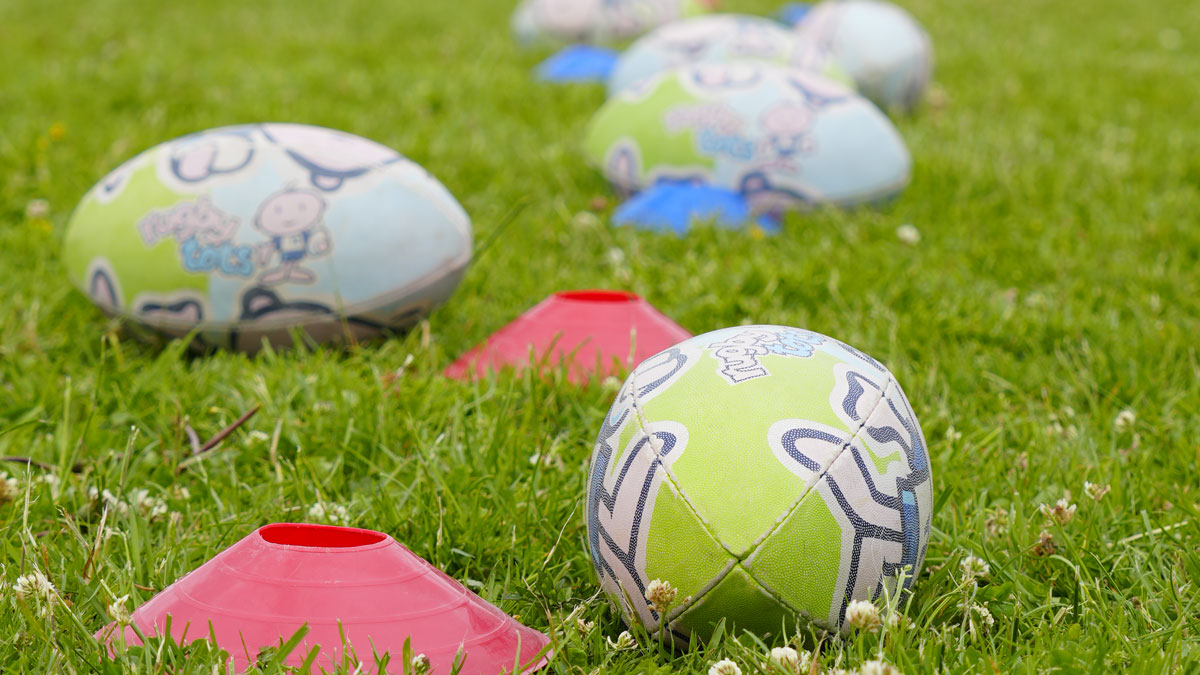
Comfy, easy-to-move-in clothes and footwear are perfect — whatever your little one feels confident in. You’ll get your Rugbytots kit in your first term, which most children love wearing to class. It’s also worth bringing a drink along, for during and after the session. Other than that, we provide everything else so that you and your child can focus on having lots of fun!
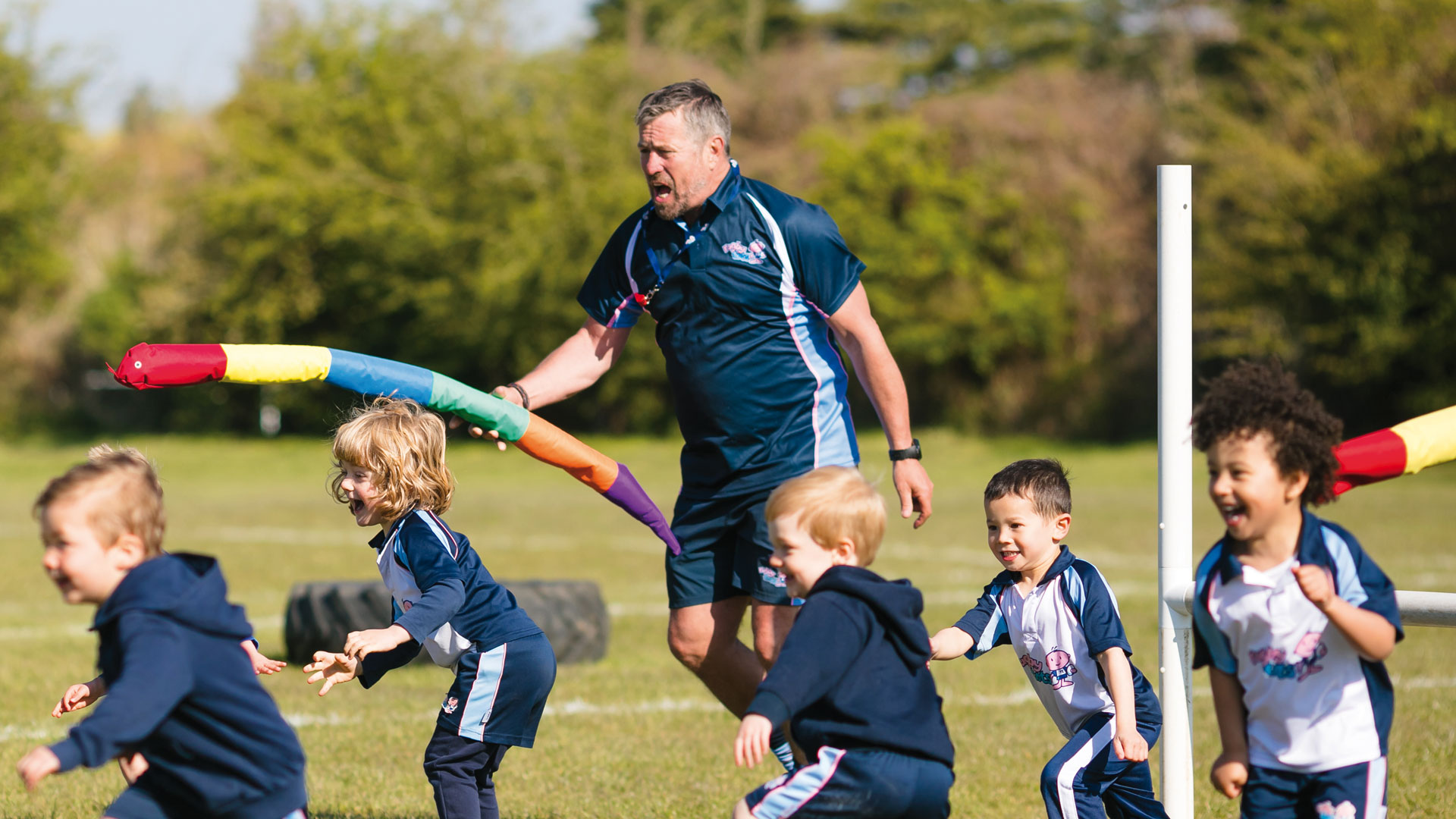
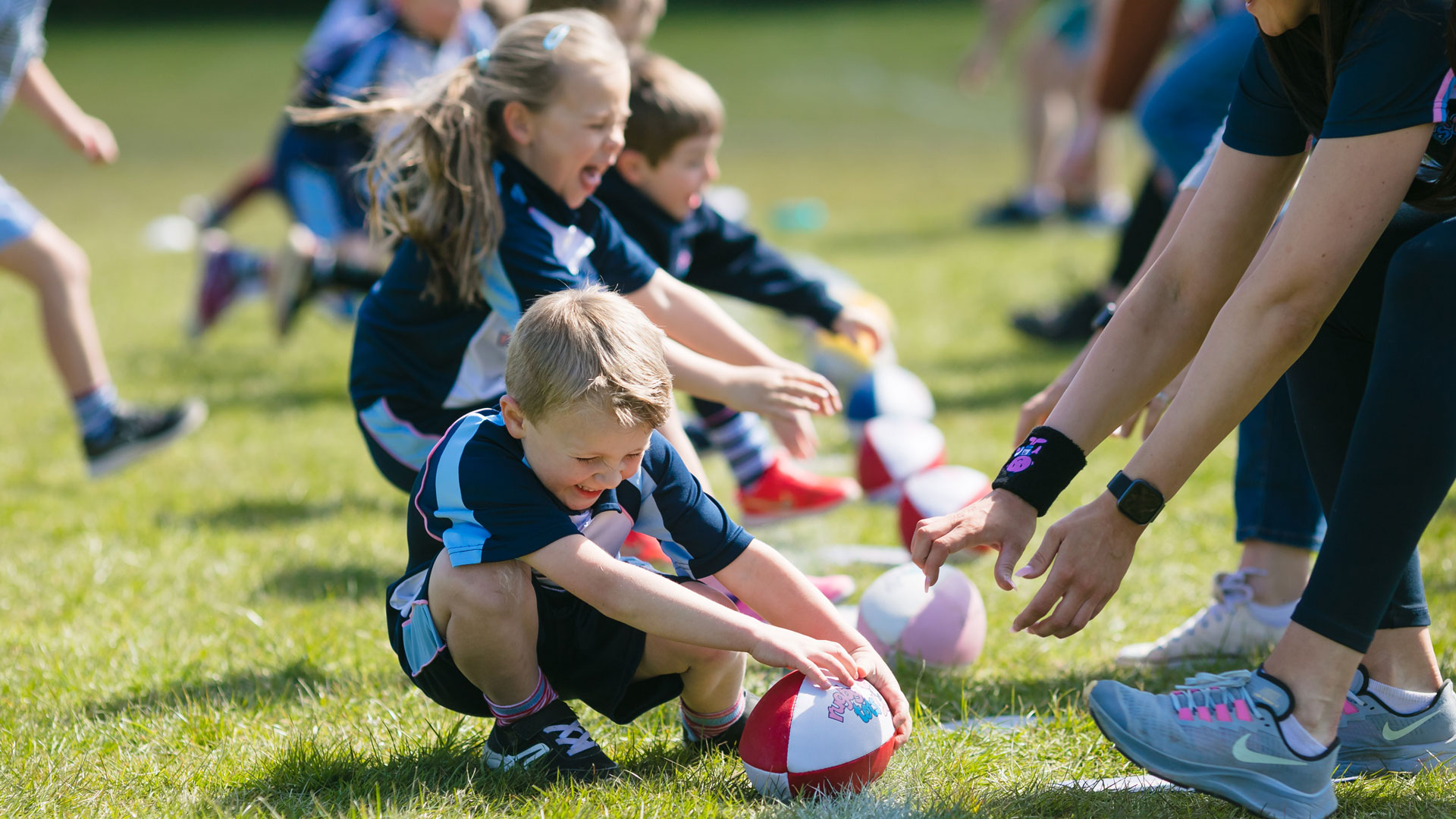
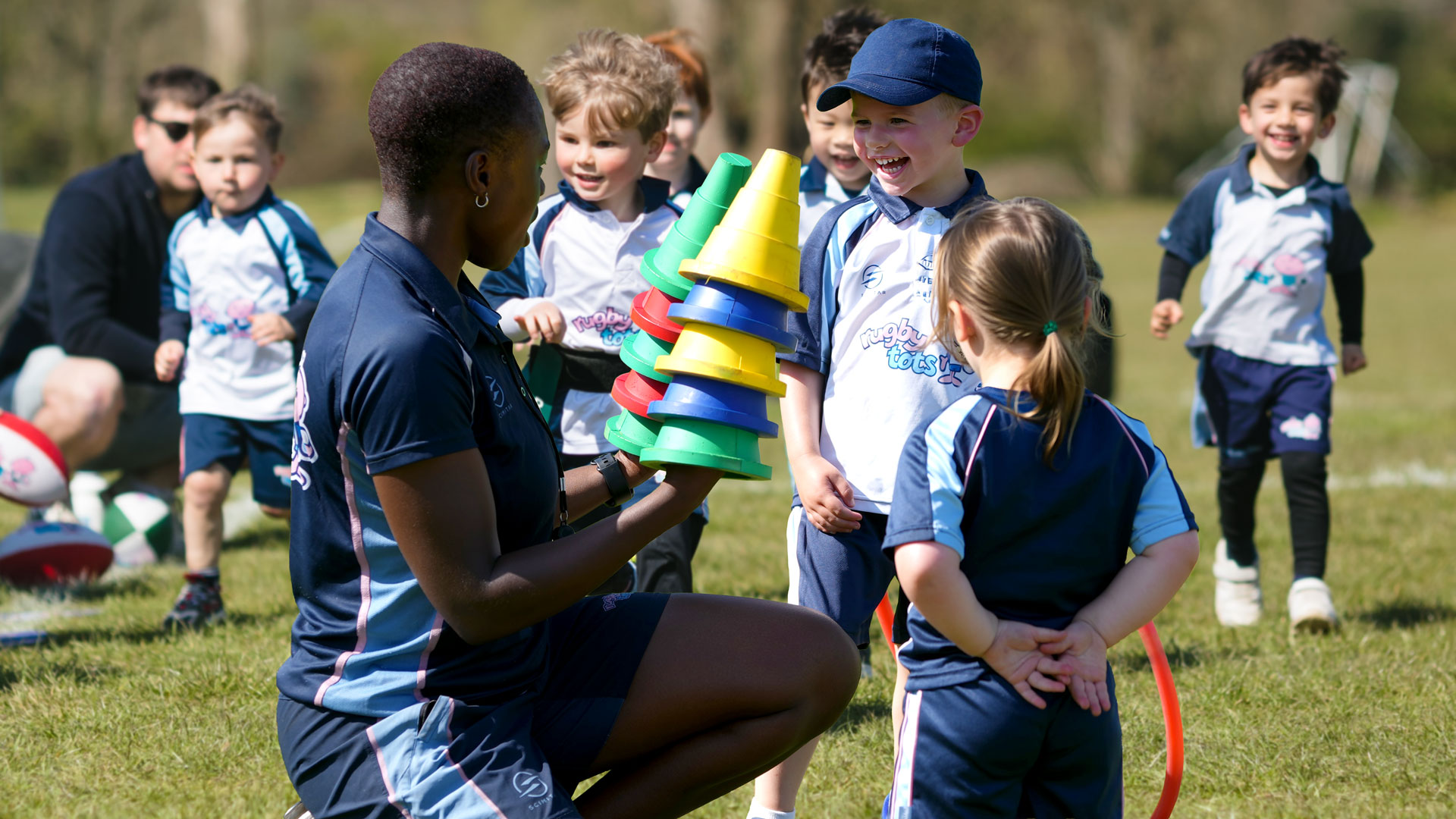
Each class is a structured play session built around a warm-up, a range of skills-based activities and plenty of physical exercise. Alongside the rugby fundamentals, children pick up broader skills such as colour recognition, counting and taking turns — but above all, it’s about having fun.
Sessions for our 2–3.5 year olds last 30 minutes. Sessions for our 3.5–5 year olds and 5–7 year olds last 45 minutes.
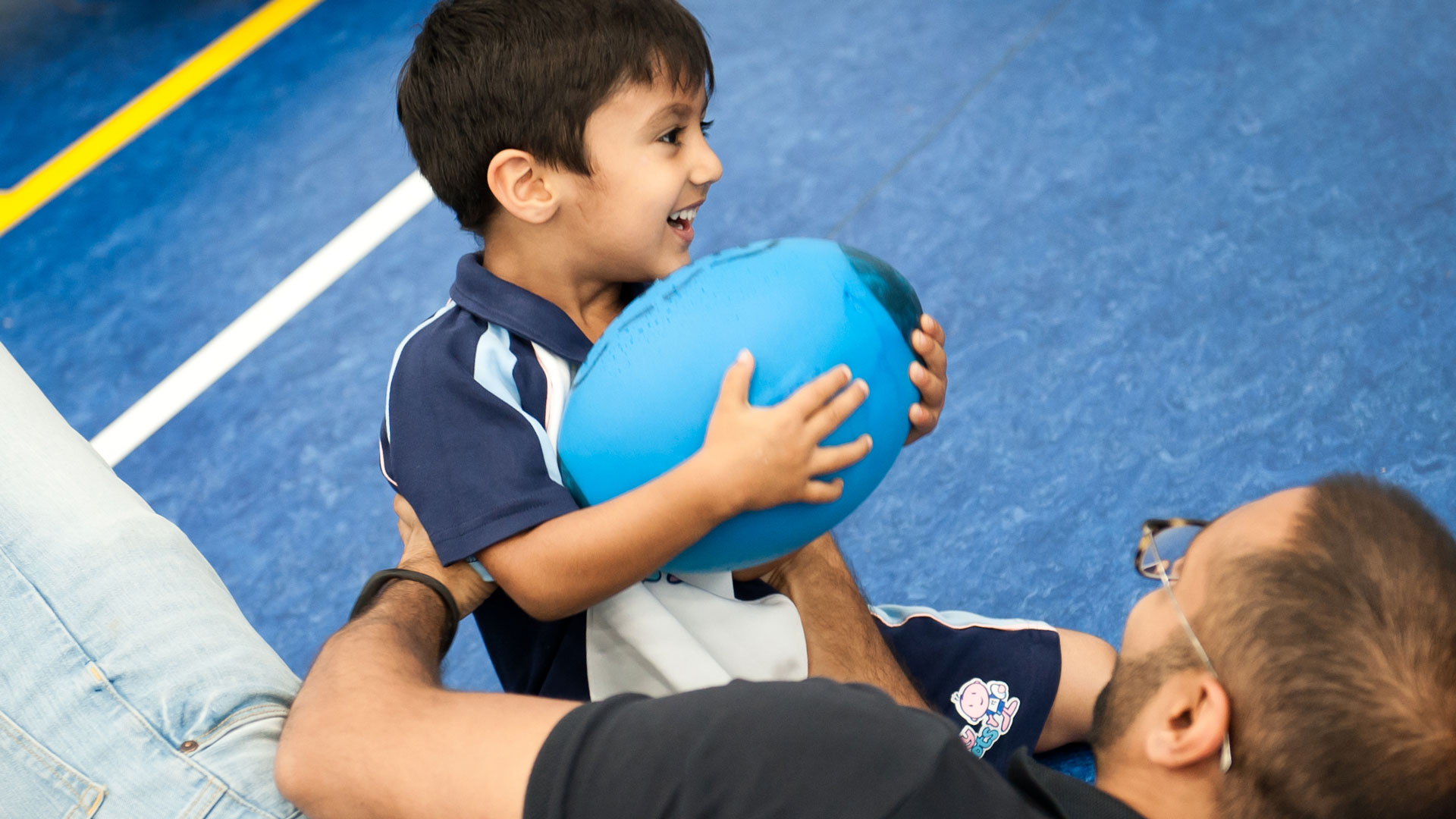
Classes are usually held indoors in sports halls, schools, leisure centres and church halls, as well as in local parks.
Grown-ups must attend all classes. They are expected to join in during our toddler classes for children age 2–3½. Adult participaton isn’t usually necessary for the classes of 3½–5 or 5–7 year classes as children are then a little more independent, but cheering and encouragement is requested!
Our standard ratio is one lead coach to 12 children. Most classes also have an assistant coach, allowing for up to 14 children.
It varies from class to class, but there is almost aways a good mix of girls and boys.
Fun and enjoyment always come first. That said, in our older classes we introduce more rugby-specific skills through games and structured techniques. And remember that throughout our classes, all activities are non-contact ones.